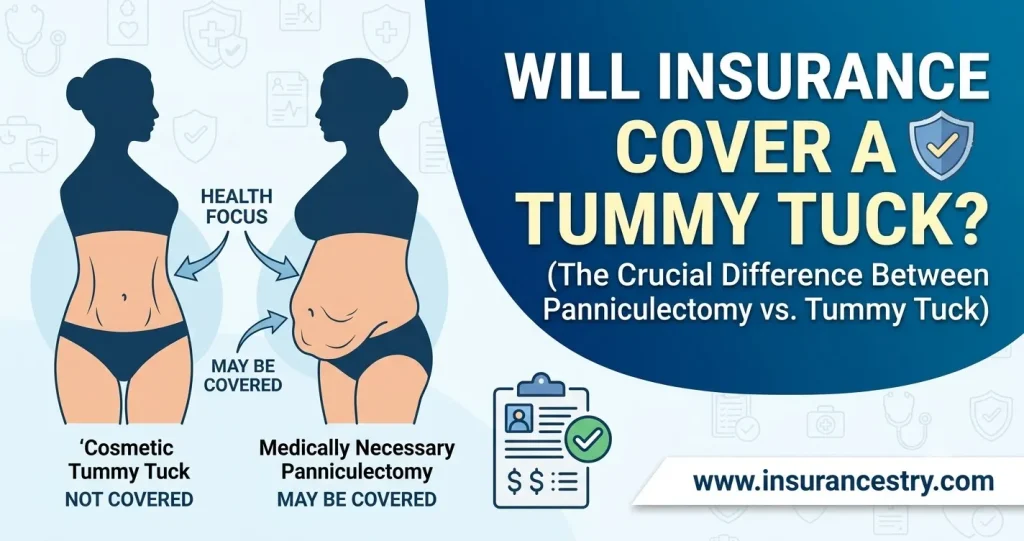
If you are dealing with loose, hanging skin after significant weight loss or pregnancy, you are likely wondering: will insurance cover a tummy tuck?
The short answer is: Standard health insurance almost never covers a purely cosmetic tummy tuck (abdominoplasty). However, insurance can cover a medically necessary skin removal procedure known as a panniculectomy.
If your excess abdominal skin causes chronic medical complications like non-healing skin rashes, severe infections, or mobility limitations, major US insurance carriers—including Blue Cross Blue Shield, Aetna, UnitedHealthcare, and Cigna—may approve coverage for functional skin removal.
Cosmetic Tummy Tuck vs. Panniculectomy: What’s Covered?
Understanding the distinction between a cosmetic abdominoplasty and a reconstructive panniculectomy is the single most important factor in securing insurance approval.
| Feature / Criteria | Reconstructive Panniculectomy | Cosmetic Abdominoplasty (Tummy Tuck) |
| Primary Goal | Remove hanging excess skin apron (Pannus) | Tighten muscles & contour waistline |
| Medical Classification | Reconstructive Procedure | Elective / Cosmetic Procedure |
| Insurance Coverage Status | Covered (With prior medical approval) | NOT Covered (100% Patient Paid) |
| Main Requirements | Chronic rash, ulcerations, failed non-surgical care | Aesthetic/Cosmetic desire |
Panniculectomy (Medically Necessary Skin Removal)
A panniculectomy is a reconstructive surgical procedure that removes the hanging “apron” of excess skin and fat (the pannicus) hanging over the lower abdomen. Insurance providers consider this procedure medically necessary when the skin fold directly causes physical health impairment rather than aesthetic dissatisfaction.
To qualify for an insurance-covered panniculectomy, insurers typically evaluate:
- Medical Complications: Documented, chronic intertrigo (fungal or bacterial skin fold infections), severe dermatitis, skin breakdown, or non-healing open ulcers beneath the pannus.
- Failure of Non-Surgical Treatment: Proof that prescription topical treatments, antifungal creams, and specialized hygiene regimens failed to resolve the issue after 3 to 6 consecutive months.
- Pannus Severity: Clinical photographs showing the hanging skin fold extends down to or below the level of the pubic symphysis (typically classified as Grade 2 pannus or higher).
- Weight Stability: Documentation confirming a stable Body Mass Index (BMI) or maintenance of your target weight for at least 6 to 12 months (especially following bariatric surgery).
Cosmetic Tummy Tuck (Abdominoplasty)
An abdominoplasty (tummy tuck) goes beyond basic skin removal. It restores separated abdominal muscles (diastasis recti), tightens internal fascia, and sculpts the waistline for aesthetic symmetry.
Because muscle repair and contouring are classified as cosmetic enhancements rather than treatment for functional disease, insurers explicitly exclude them.
Important Policy Detail: If your surgeon performs a combined procedure—removing the skin apron and repairing separated abdominal muscles in the same operation—your insurer may approve and cover the panniculectomy portion (CPT Code 15830). However, you will remain responsible for out-of-pocket costs associated with muscle repair, additional operating room time, and cosmetic surgical fees.
Hidden Fine Print & Policy Exclusions to Watch Out For
Navigating insurance coverage requires knowing where claims typically get denied. Before scheduling a surgical consultation, review your policy’s Evidence of Coverage document for these common hurdles:
- The Diastasis Recti Clause: Tightening separated abdominal muscles after pregnancy is almost universally considered cosmetic by US health plans, including Medicare and Medicaid, unless it directly accompanies a complex, symptomatic ventral hernia repair.
- The “Lack of Conservative Care” Denial: The most common reason for initial claim rejection is a lack of continuous physician documentation. If your primary care doctor hasn’t recorded every infection, rash, and prescribed medicine over several months, the insurance medical reviewer will mark the procedure as elective.
- Incomplete Photo Evidence: Pre-authorization requires strict medical photography. Photos must clearly show the overhang length, the condition of the skin underneath, and active inflammation. Generic selfies or non-clinical photos will trigger immediate denials.
- Out-of-Network Surgical Facilities: Even if your plastic surgeon is in-network, the outpatient surgery facility or anesthesiology team might not be. Always verify in-network status for the whole surgical team to prevent surprise medical billing.
Real-World Example: Claim Breakdown
Consider Sarah, a 36-year-old patient from Ohio who lost 120 pounds following bariatric weight-loss surgery. She developed a severe pannus that hung past her pubic region, causing painful skin irritation during daily exercise.
Here is how her medical documentation and claim were processed across her health plan:
- Documenting the Paper Trail: Over eight months, Sarah visited her primary care physician and a board-certified dermatologist four times. Her medical chart documented three separate instances of recurrent fungal rashes that failed to clear despite using prescription topical Nystatin cream.
- Surgeon Consultation: Sarah consulted an in-network plastic surgeon who performed a clinical evaluation, measured her Grade 3 pannus, and took standardized clinical photos.
- Pre-Authorization Submission: The surgeon submitted a pre-authorization request for CPT Code 15830 (Panniculectomy) with supporting clinical notes and treatment history.
- Final Cost & Coverage Breakdown:
| Fee Category | Billed / Standard Rate | Insurance Negotiated Rate | Insurance Paid | Patient Out-of-Pocket |
| Panniculectomy (CPT 15830) | $9,200 | $5,800 | $3,840 | $1,960 (Deductible + Coinsurance) |
| Elective Muscle Repair | $3,500 | N/A (Cosmetic) | $0 | $3,500 (Paid out-of-pocket) |
| Facility & Anesthesia | $4,100 | $2,900 | $2,320 | $580 (Coinsurance) |
| Total Patient Responsibility | — | — | — | $6,040 |
Step-by-Step Guide: How to Get Insurance to Cover Skin Removal
If you suffer from chronic skin issues caused by excess abdominal tissue, follow this step-by-step roadmap to build a solid prior authorization claim:
Step 1: Establish a Continuous Medical Records Trail
Visit your primary care doctor or dermatologist every time you experience rashes, skin tears, or active infections beneath your skin fold. Ensure your physician explicitly records:
- Prescription creams, powders, and oral treatments prescribed.
- Dates of symptom onset and duration.
- Specific functional limitations (e.g., inability to walk without friction ulcers).
Step 2: Request Your Plan’s Clinical Coverage Guidelines
Call your health plan’s customer service department and ask for the Medical Policy Bulletin for Panniculectomy. This document details the exact requirements your insurer uses to approve or deny claims.
Step 3: Consult a Board-Certified Plastic Surgeon
Schedule a consultation with a surgeon experienced in reconstructive skin removal who accepts insurance. Bring your medical records showing past non-surgical treatment history.
Step 4: Submit a Pre-Authorization Request
Your surgeon will take standardized clinical photographs and submit a formal prior authorization request to your insurer before scheduling surgery. Never proceed with surgery without an official, written prior authorization approval letter.
Step 5: Appeal If Denied
If your initial claim is rejected, do not give up. Initial denials are common. Work with your doctor to file a formal appeal that includes updated chart notes, additional photo evidence, or a request for a peer-to-peer review between your surgeon and the insurance company’s medical director.
Key Differences: Abdominoplasty vs. Panniculectomy
| Feature | Panniculectomy | Cosmetic Tummy Tuck (Abdominoplasty) |
| Primary Objective | Remove hanging excess skin fold | Tighten muscles & contour waistline |
| Medical Necessity | Yes (Reconstructive) | No (Elective) |
| Insurance Coverage | Covered with prior approval | Excluded (100% Patient Paid) |
| Required Pre-requisites | 3–6 months documented medical care | None (Self-pay) |
| Abdominal Muscle Repair? | Excluded | Included |
| Average Self-Pay Cost | $4,000 – $8,000 (if denied) | $6,000 – $12,000+ total out-of-pocket |
Is a Tummy Tuck Dangerous? Safety & Risk Factors
Understanding surgical safety is an essential part of your research. Like any major surgical procedure performed under general anesthesia, a tummy tuck or panniculectomy carries real medical risks:
- Common Surgical Risks: Infection, wound healing issues along the incision line, fluid accumulation beneath the skin (seroma), hematoma, and visible scarring.
- Severe Risks: Deep vein thrombosis (DVT) and pulmonary embolism (PE). Because abdominal surgery alters intra-abdominal pressure and requires temporary bed rest, blood clot risk is higher than in minor surgeries.
- Risk Reduction: Selecting a board-certified plastic surgeon operating in an accredited hospital or surgical facility, using compression boots during surgery, and moving around gently soon after the operation significantly reduces major complications.
Frequently Asked Questions
Yes, insurance will cover skin removal (panniculectomy) after major weight loss if you can prove medical necessity. You must demonstrate that the hanging skin fold causes chronic skin issues or functional impairment that failed to resolve with prescription non-surgical treatments, and that your weight has remained stable for 6 to 12 months.
If your insurance plan denies coverage, the average out-of-pocket cost for a full cosmetic tummy tuck in the United States ranges between $6,000 and $12,000+. This total typically includes surgeon fees, operating room facility fees, anesthesia, and post-operative surgical garments.
Yes. Many surgical practices offer third-party medical financing programs (such as CareCredit or Alphaeon Credit) or flexible payment plans. You can use financing to pay for the out-of-pocket cosmetic components (like abdominal muscle tightening) while your insurance covers the medically necessary panniculectomy portion.
Getting insurance to cover excess abdominal skin removal requires thorough preparation, patient self-advocacy, and detailed medical record-keeping. Start by talking with your primary care provider about your symptoms, gather your treatment records, and request your insurance company’s specific clinical guidelines before moving forward.