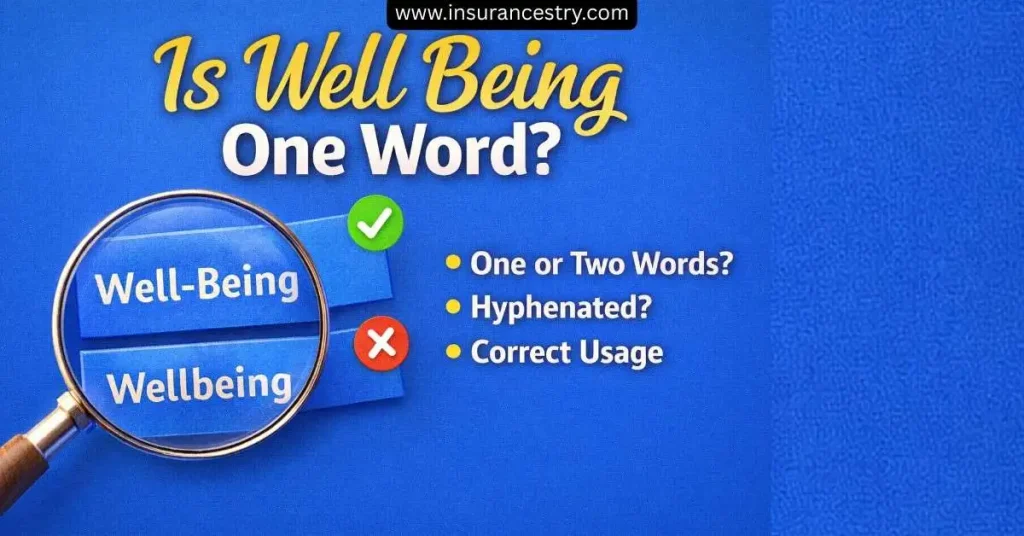
If you’ve ever paused mid-sentence wondering is well being one word, you’re not alone. This small styling choice pops up in articles, HR copy, academic writing, and social posts—and getting it right helps your writing look polished and professional.
Short answer up front: in standard American English the preferred form is well-being (hyphenated). Below you’ll find practical rules, real examples, and simple tips so you never have to ask is well being one or two words again.
Why the question “Is well being one word?” matters
Writers ask “is well being one word or two” because the phrase appears everywhere—from mental health coverage to workplace wellness pages. How you write it affects:
- Readability: the hyphen clarifies the compound idea.
- Tone: well-being reads more formal than well being.
- Consistency: search engines and style guides prefer one standard in published text.
So answering is well being one word or hyphenated isn’t just grammar nitpicking—it’s about clarity and credibility.
The grammar behind well-being
“Well” is an adverb modifying “being.” Together they form a compound noun describing a state of health, happiness, or life satisfaction. Many style guides and editors recommend the hyphen because it signals that the two words act as a single concept: well-being.
- Use well-being when you want a clean, professional style.
- well being (two separate words) is readable but less polished.
- wellbeing (one word) appears in some British and informal uses, but it’s not the safest choice for American editorial work.
If you’re asking is well being one word or 2, prefer the hyphen for formal and SEO-friendly content.
When to use well-being, well being, or wellbeing
well-being (hyphenated) when:
- Writing for publication (news, blogs, academic articles)
- Following AP, Chicago, or other major style guides (they favor hyphenation)
- You want clarity in compound constructions (e.g., “employee well-being programs”)
Use well being (two words) when:
- Writing very casual copy or quick notes where formality isn’t required
- Following a client or brand style that prefers the two-word form
Use wellbeing (one word) when:
- Writing for audiences or publications that commonly accept the one-word variant (more common in some UK/Aus outlets)
- You’ve confirmed the in-house style guide allows it
These options resolve the common confusion about is well being one word or two by giving you situational rules.
Examples: Correct usage in sentences
- Correct (preferred): “Workplace initiatives that support employee well-being reduce turnover.”
- Acceptable (informal): “I checked on her well being after the move.”
- Regional (one-word often seen): “Community wellbeing is a priority in many cities.”
These examples show how tone and audience determine whether you answer “is well being one word?” with a hyphen or not.
Actionable tips for writers and editors
- Default to well-being in all formal, public-facing content. This answers “is well being one word or hyphenated” for most use cases.
- Run a sitewide find/replace to normalize whichever form your brand chooses—consistency matters more than the specific choice.
- If you manage a style guide, add a short rule: “Use well-being (hyphenated) unless otherwise instructed.”
- For SEO, include natural variants in body copy once (e.g., “well-being (sometimes spelled wellbeing)”) to capture different search queries without stuffing.
- When in doubt, check the target publication’s style guide before publishing.
Following these steps resolves the “is well being one word or 2” question while keeping your content tidy.
Quick checklist: which form to use now
- Publishing news, research, or formal content – well-being
- Informal emails, notes, or chat – well being (fine)
- Regional or specific publisher prefers one word – wellbeing (check first)
This checklist gives a fast answer to “is well being one word or two” whenever you’re writing.
Final answer to “Is well being one word?”
To wrap up: No — in standard American usage, “well being” is not one word. The recommended, professional form is well-being (hyphenated). You may see well being (two words) in casual contexts and wellbeing as a one-word variant in some regions, but if someone asks is well being one word or hyphenated, the safe, widely accepted choice is the hyphen.
Use well-being consistently in your content to appear polished, clear, and editorially sound.
Read more articles: Knowledge
FAQs
A: Generally no. Prefer well-being (hyphenated) in American English.
A: It’s typically hyphenated (well-being) or written as two words (well being) in casual use.
A: Hyphenated (well-being) is the recommended form for formal writing.
A: Use well-being for clarity; the two-word form is less formal but acceptable in casual contexts.
A: Some publications accept wellbeing, especially outside the U.S., but verify the style guide first.